How to Invest in Dubai Real Estate


Dubai has become one of the world’s most attractive destinations for property investors. Its stable economy, tax-free ownership, and well-regulated real estate market make it a safe and profitable choice for both first-time and experienced investors. With clear laws enforced by the Dubai Land Department (DLD) and the Real Estate Regulatory Agency (RERA), investors can purchase properties in freehold zones, enjoy secure transactions, and benefit from long-term capital growth.
From earning steady rental income to gaining high returns through off-plan projects or building a diversified property portfolio, Dubai offers opportunities for every type of investor. This guide explains how to invest in Dubai real estate step by step, helping you make informed decisions and achieve your investment goals.
Types of Property Investments in Dubai
Dubai offers multiple investment models, giving investors flexibility based on budget, risk appetite, and goals.
1. Freehold vs Leasehold
Freehold properties provide complete ownership, making them the most preferred choice for foreign investors. Leasehold properties operate on long-term lease rights and are usually found in non-freehold zones.
2. Off-Plan vs Ready Properties
- Off-Plan Properties: These are purchased during construction and offer several advantages: lower entry prices, flexible payment plans, higher potential for capital appreciation at handover, and protection through escrow accounts and RERA regulations.
- Ready Properties: These are completed units that provide immediate rental income, instant possession, and a title deed, making them ideal for buy-to-let investors.
3. Residential vs Commercial
- Residential investments include apartments, villas, townhouses, and branded residences. These offer stable rental demand and are preferred by most investors.
- Commercial properties offices, warehouses, retail shops provide higher rental yields but require deeper market research.
4. Short-Term Rentals vs Long-Term Rentals
- Short-term (Holiday Homes): High returns in tourist areas like Dubai Marina, Downtown, Palm Jumeirah. Regulated by DTCM.
- Long-term Rentals: Steady income with lower management costs, ideal for JVC, Dubai Hills, Meydan, and Business Bay.
This combination of property types makes Dubai one of the world’s most flexible markets for real estate investment.
Step-by-Step Guide for Investing in Dubai Real Estate
Step 1: Define Your Investment Goal
The first step is to define your investment goal clearly. Determine whether you are aiming for rental income, capital appreciation, a hybrid strategy, long-term or short-term returns, or holiday home income. Knowing your objective helps you choose the right area and property type to maximize your investment potential.
Step 2: Research High-ROI Communities
Top-performing areas for investing in Dubai real estate include:
- JVC – One of the highest rental returns
- Dubai Hills Estate – Long-term growth, premium tenants
- MBR City & Meydan – Strong off-plan appreciation
- Dubai Creek Harbour – Waterfront community with future potential
- Dubai South – Expo-driven growth and affordability
Step 3: Verify Developer & Project Legitimacy
Investor safety is paramount in Dubai, and verification is simple.
Tools:
- RERA Project Tracker – Confirms project status
- Escrow Account Verification – Ensures funds are protected
- DLD Approvals – Confirms legality of the property
Choose developers with proven track records and timely delivery performance.
Step 4: Understand the Total Buying Cost
Before investing in Dubai property, it’s important to understand the total buying cost to plan your budget accurately. Key components include DLD registration fees, agency commission, trustee fees, service charges, and any mortgage-related fees if you are financing the purchase. These costs vary by property type, community, and payment structure, so being aware of them ensures transparency and prevents unexpected expenses.
Step 5: Choose the Right Investment Strategy
Your strategy defines your ROI.
Buy-to-Let
- Ideal for ready properties
- Generates monthly cash flow
- Works best in communities with high demand
Buy-to-Flip
- Common with off-plan projects
- Purchase early → sell at completion
- Relies on capital appreciation
Long-Term Hold
- Beneficial for investors seeking asset growth
- Works well in premium communities
Step 6: Secure Your Property
Once you finalize a property, the buying process is streamlined:
For Off-Plan:
- Sign Reservation Form
- Sign SPA (Sales & Purchase Agreement)
- Register with Oqood
- Pay according to project milestones
For Ready:
- Sign Form F (contract)
- Transfer through DLD trustee office
- Receive your Title Deed
Dubai’s digital system makes the transaction smooth and transparent.
Step 7: Property Management & Rental Setup
Effective property management and rental setup is key to maximizing rental income. This includes Ejari registration for long-term leases, obtaining a holiday home license for short-term rentals, implementing a furnishing strategy to attract tenants, and deciding between self-management or hiring an agency. Proper management ensures higher occupancy, better tenant retention, and improved ROI.
Step 8: Contact Best Real Estate Agency
Working with a RERA-licensed real estate agency helps investors choose the right area, analyze ROI, handle negotiations and documentation, and manage the property, especially vital for new or overseas buyers.
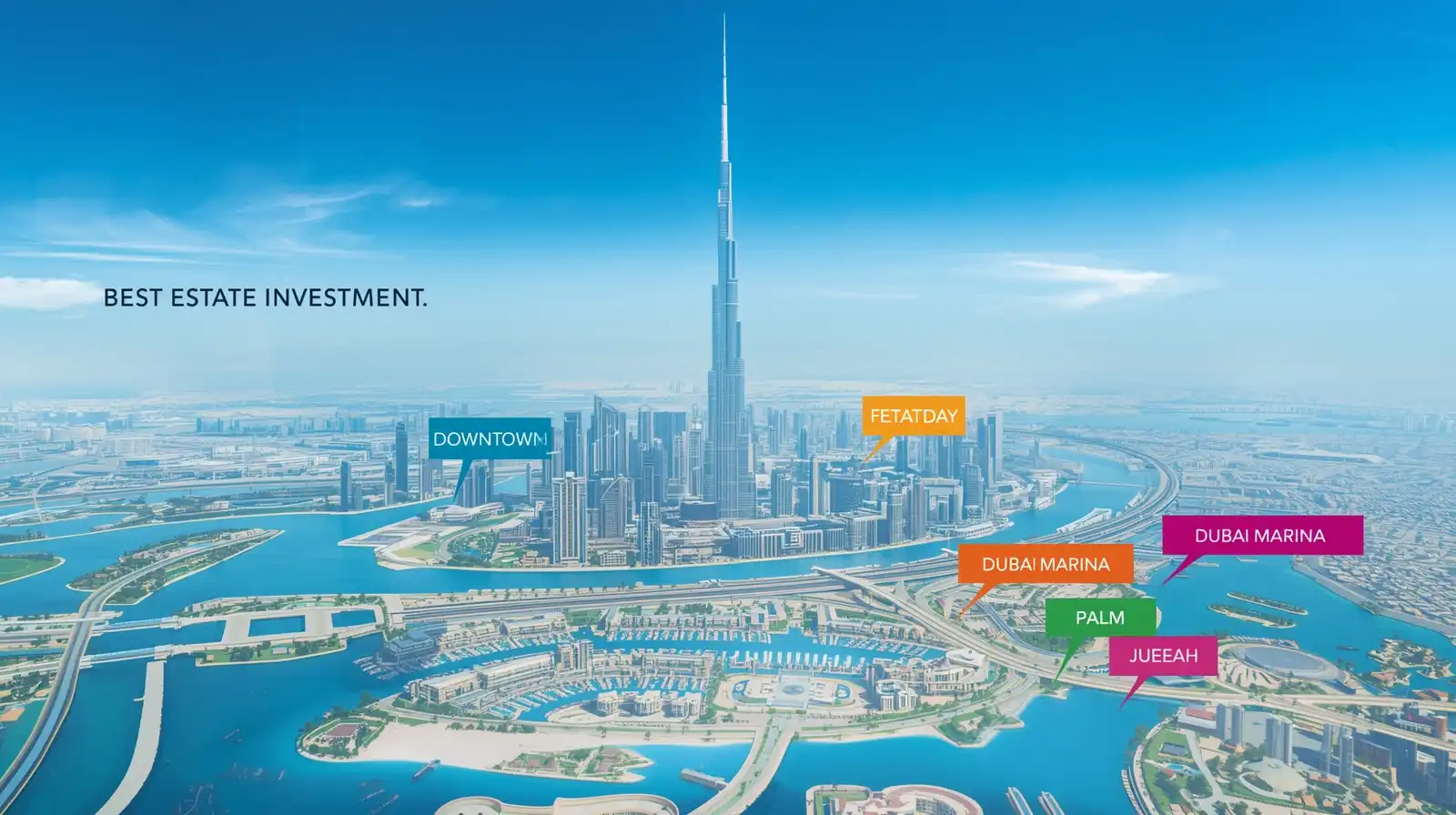
Best Areas in Dubai for Real Estate Investment
High ROI Areas
- JVC – Affordable, strong rental yield
- Dubai Silicon Oasis – Tech hub with demand
- DAMAC Hills 2 – Low entry prices, good demand
Premium Areas
- Downtown Dubai – Luxury, premium appreciation
- Business Bay – High rental occupancy
- Dubai Marina – Popular with expatriates and professionals
Ultra-Luxury Areas
- Palm Jumeirah – Waterfront mansions and apartments
- Dubai Hills Estate – Golf-course mansions
- Emirates Hills – Dubai’s most exclusive villa district
Emerging Hotspots
- MBR City – Future luxury hub
- Dubai Creek Harbour – Waterfront mega-development
- Dubai South – Logistics, aviation, Expo zone
Why Invest in Dubai Real Estate
- Strong economic stability ensures steady property demand
- Tax-free ownership and no capital gains tax
- Secure market regulated by DLD and RERA with escrow protection
- High rental yields in JVC, Dubai Marina, Downtown, Business Bay
- Full freehold ownership for foreigners in designated areas
- Capital appreciation from mega projects like MBR City and Dubai Creek Harbour
- World-class infrastructure and strategic location
- Certain investments qualify for long-term residency and Golden Visa
Conclusion
Investing in Dubai real estate is one of the most secure and growth-oriented opportunities available to global investors today. With transparent regulations, strong rental demand, and long-term appreciation, Dubai continues to be a top-performing property market.
By following the right process—setting goals, researching communities, verifying developers, calculating costs, and selecting the right strategy—you can ensure your Dubai real estate investments are profitable and safe.
Due diligence, research, and working with licensed professionals are the keys to smart property investment in Dubai.
FAQ
Is Dubai a good place to invest in real estate?
Yes. Dubai offers tax-free ownership, strong rental demand, rising property values, and strict investor protections through DLD and RERA.
What is the minimum investment in Dubai property?
There is no fixed minimum to buy property—depends on project, area, and developer. For investor visas, minimum criteria apply.
Can foreigners own property in Dubai?
Yes. Foreigners can buy property in all designated freehold zones such as Marina, Downtown, Business Bay, JVC, and Palm Jumeirah.
What gives higher ROI: off-plan or ready?
- Off-plan usually offers higher capital appreciation.
- Ready properties offer immediate rental income.
How to verify if a project is RERA approved?
You can check through the RERA Project Tracker or verify the project’s escrow account with DLD.
More in Investor Insights

Benefits of investing in off plan projects in Dubai
How to Invest in Off‑Plan Projects in Dubai